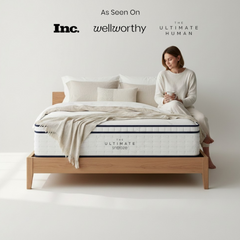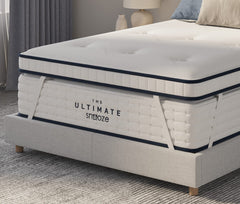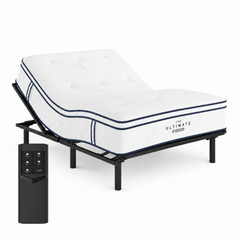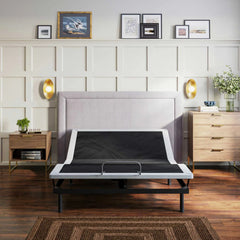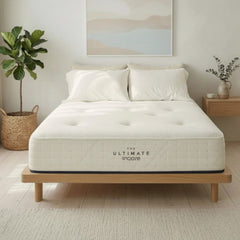
Pure Organic Latex Mattress | Firm
A breathable organic mattress designed for proper alignment, everyday comfort, and toxin-free sleep. With 1" comfort latex top layer.
from
$1,780.00$2,199.99


 Gary Brecka's Ultimate Snooze Sleep Guide August, 2026
Sleep is active recovery, not lost time. While you sleep, your brain organizes memory and learning. Your body regulates hormones, repairs tissue, supports immune function, and prepares you to perform the next day.
Time in bed is not the same as restorative sleep. Light, stress, caffeine, alcohol, temperature, discomfort, and an irregular schedule can interrupt the stages that support mental and physical recovery.
One-third of your life: Eight hours a night equals roughly one-third of every day spent in direct contact with your sleep environment.
At least seven hours: Adults ages 18 to 60 are generally advised to get seven or more hours each night for health and performance.
Four to six cycles: Most people move through the stages of sleep about four to six times per night. Each cycle has a different job.
After 24 hours awake: Average reaction time can be about three times slower, and CDC/NIOSH compares overall impairment with a 0.10% blood alcohol level.
Cognitive function: Stronger attention, working memory, decision-making, learning, and reaction time.
Motor skills: Better coordination, accuracy, timing, and the ability to learn physical tasks.
Hormone regulation: Healthier timing of cortisol, melatonin, appetite signals, and hormones involved in growth and metabolism.
Muscle recovery: Deep sleep supports protein synthesis, tissue repair, and the release of growth hormone linked with physical recovery.
Mood and resilience: REM sleep helps the brain process emotion, while adequate sleep supports patience, communication, and stress control.
Immune and metabolic health: Sleep supports immune defenses, glucose control, appetite regulation, and long-term cardiovascular health.
Your circadian rhythm is the clock. Morning light starts the biological day. Darkness helps time melatonin, lower alertness, and prepare the body for night.
Adenosine creates sleep pressure. It builds while you are awake. Late caffeine blocks this signal and can reduce sleep quality even when you still fall asleep.
The nervous system controls the shift. At night, heart rate, muscle tension, body temperature, and mental activity need room to settle.
Give your body clear, repeatable signals from morning through bedtime. Start with the actions you can repeat most days, track how you feel, and improve one variable at a time.

Better sleep begins when you wake up. Morning and daytime habits set your body clock and build the sleep pressure you need later.
Wake within the same 30-minute window.
Do this: Choose a wake time you can follow every day, including most weekends.
Why it helps: A steady wake time anchors the body clock that controls alertness in the morning and sleepiness at night.
Get outdoor light soon after waking
Do this: Before checking your phone, get at least 10 minutes of outdoor light when conditions allow. Gary prefers to do this without sunglasses.
Why it helps: Morning light tells the brain that the biological day has started. A strong daytime signal helps the body recognize darkness later.
Rehydrate before caffeine
Do this: Drink water after waking. Gary's routine may also include minerals, a hydrogen tablet, and essential amino acids.
Why it helps: Fluids and minerals support normal nerve, muscle, and energy function after the overnight fast.
Move early and exercise during the day
Do this: Walk outside in the morning if possible. Add regular strength training or aerobic exercise earlier in the day.
Why it helps: Movement supports energy, glucose control, stress relief, and stronger sleep pressure. Hard training too close to bed can keep some people alert.
Build breakfast around protein
Do this: Gary recommends about 30 grams of protein at breakfast when it fits your nutrition plan.
Why it helps: Protein can improve fullness and help create steadier energy, which may reduce stress-driven snacking and energy swings later.
Time caffeine instead of chasing energy
Do this: Wait about 60 minutes after waking before your first caffeine. Stop at least eight hours before bed.
Why it helps: Caffeine blocks adenosine, the signal that builds sleep pressure. Its effects can last long after the energy boost feels gone.
Track the basics
Do this: Record total sleep, time to fall asleep, wake-ups, and how you feel the next day. Use wearable data as a trend, not a grade.
Why it helps: Simple tracking helps you connect habits with outcomes. Compare your results with your own baseline, not someone else's score.

Your evening should remove stimulation in a predictable order. The exact routine can vary, but the signals should stay consistent.
Finish dinner about three hours before bed
Do this: Build dinner around protein and fiber with moderate starch. Leave roughly three hours between dinner and sleep.
Why it helps: Digestion creates heat and keeps the body active. More time before bed can make the transition into sleep easier.
Protect sleep from alcohol
Do this: Ideally, avoid alcohol. If you drink, stop three to four hours before bed.
Why it helps: Alcohol may make you feel sleepy at first, but it can raise overnight heart rate, increase wake-ups, and reduce REM sleep.
Lower light and stop screens early
Do this: Dim bright lights and stop screens two to three hours before bed when possible. Use warmer, lower light as bedtime approaches.
Why it helps: Bright and blue-heavy light tells the brain that it is still daytime and can delay the body's natural melatonin signal.
Keep work and stress out of bed
Do this: Do not use the bed for email, arguments, television, or endless scrolling. Write down tomorrow's priorities before you lie down.
Why it helps: Your brain learns by association. A bed used mainly for sleep becomes a stronger cue for recovery.
Make the room a recovery space
Do this: Start near 65 to 68 degrees Fahrenheit. Make the room dark, control sudden noise, ventilate it, and choose comfortable, breathable bedding.
Why it helps: Cooler temperature, darkness, steady sound, clean air, and good support remove reasons for the brain and body to stay alert.
Repeat a calm closing routine
Do this: Use slow breathing, light reading, prayer, meditation, gentle stretching, or a warm shower. Follow the same short sequence most nights.
Why it helps: A repeated routine becomes a signal that the day is over and nothing more is required.
Magnesium: Gary uses a magnesium complex about one hour before bed. The original protocol suggests 200 to 400 milligrams of magnesium bisglycinate or a magnesium complex. Check the product label and speak with a clinician if you take medication, are pregnant, have kidney problems, or have another medical condition.
Melatonin: Gary does not default to melatonin. He first works on light, timing, caffeine, and the bedtime routine. Melatonin may help with jet lag or certain body-clock problems, but timing and dose matter.
Mouth taping: Do not use it with untreated sleep apnea, blocked nasal breathing, reflux or nausea, after alcohol, or if it creates anxiety. Persistent snoring, choking, gasping, or suspected sleep apnea should be evaluated by a clinician.

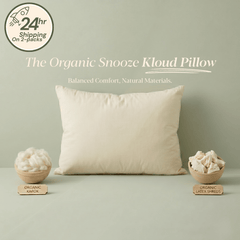
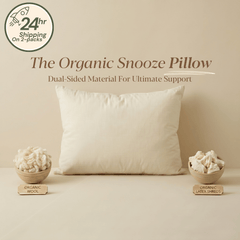
You spend about one-third of your life in bed. That is seven to nine hours each night with your skin, lungs, and body close to a mattress, pillow, sheets, and protector. The sleep environment should support recovery, not add avoidable variables.
Ultimate Snooze estimates that roughly 98% of mattresses use at least some synthetic or chemically processed materials. That includes common builds made with polyurethane or memory foam, synthetic fabrics, adhesives, coatings, and manufactured fire barriers. Ultimate Snooze is built for the other 2%: sleep systems centered on organic and natural latex, cotton, and wool.
Off-gassing: Some foams, adhesives, coatings, and finishes can release volatile organic compounds, especially when new.
Heat retention: Dense synthetic foams can trap heat, working against the natural temperature drop your body needs before sleep.
Unknown additives: Broad labels such as polyurethane foam, synthetic fiber, or blended material may not tell you every chemical used during production.
Long contact time: Nightly exposure is repeated for years. It is reasonable to reduce unnecessary low-level exposure when cleaner, transparent alternatives are available.
Important context: Synthetic does not automatically mean harmful, and odor alone does not prove danger. The stronger standard is material transparency, third-party certification, airflow, and fewer unnecessary inputs.
Attention and working memory decline; decisions and communication can become less reliable.
Reaction time and motor coordination slow, increasing errors and reducing physical precision.
Mood can become more reactive while appetite and glucose control become less stable.
Training can feel harder, while muscle repair and recovery receive less support.
Focus, memory, reaction time, and decision-making are better supported.
Motor learning and coordination have time to consolidate.
Deep sleep supports tissue repair, growth-hormone timing, and immune function.
REM sleep supports emotional processing, learning, creativity, and mental flexibility.
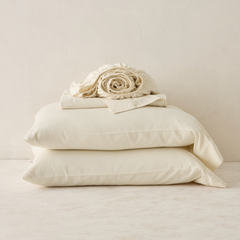
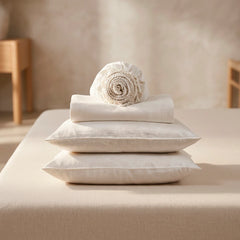
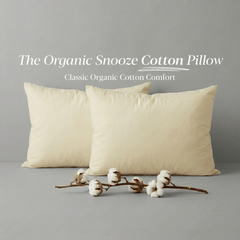
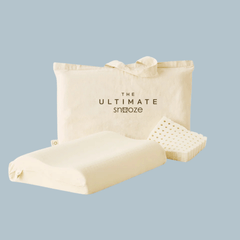
An organic mattress alone does not control every surface around you. A complete system uses breathable, recognizable materials across the mattress, pillows, sheets, and protection. It cannot replace healthy habits, but it can remove common disruptors such as trapped heat, poor support, hard-to-clean surfaces, and uncertainty about materials.
The standard is simple: cool, dark, quiet, supportive, breathable, clean, and made from materials you can identify. Learn more at theultimatesnooze.com.
Sources and claim note: Sleep-performance guidance is based on CDC/NIOSH and NIH/NHLBI resources. The 98% figure is an Ultimate Snooze market estimate based on the prevalence of conventional synthetic mattress construction; it is not a government industry audit.
This guide is for education only and is not medical advice. Speak with a qualified clinician about ongoing sleep problems, breathing concerns, supplements, or medical conditions.

That white tag on your mattress is a law label. It often says, 'Under penalty of law, this tag not to be removed except by the consumer.' The warning protects the label before sale so manufacturers, distributors, and retailers cannot remove the material disclosure. Once you own the mattress, you are the consumer, but keeping the tag can help with warranty and material records.
The tag usually names filling materials and may list them by percentage. It is a starting point, not a complete ingredient list: adhesives, coatings, additives, the full fire barrier, and emissions testing may not appear


Find the white law tag on your current mattress and take a photo before it fades or tears.
Read the first three filling materials. Compare them with the guide above.
If the tag uses a vague term, ask the manufacturer what it contains and how the fire barrier is built.
Do it now: Go look at the tag on the mattress you sleep on tonight. You may know more about the ingredients in your breakfast than the materials surrounding you for one-third of your life.
Important: 'Good' does not prove organic, and 'look closer' does not prove a material is unsafe. Law-tag rules vary by state. Use the tag to screen materials, then verify the full construction and certifications with the manufacturer. Sources: California BHGS and Pennsylvania bedding-label guidance.
Learn More at TheUltimateSnooze.com