



By Jacob Rivera, Creative Director at The Ultimate Snooze
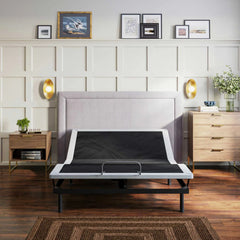
Adjustable bases carry an association with hospital beds and late-night TV infomercials that undersells what they actually do. The ability to elevate your head, elevate your feet, or achieve the zero-gravity position is not about reading in bed or watching television — it is about addressing a specific set of physiological problems that a flat sleeping surface cannot solve, regardless of how good the mattress is.
The Zero-Gravity Position
The zero-gravity position was developed by NASA to distribute the physical stress of launch across the body as evenly as possible. In sleep, it refers to a position where both the head and the knees are slightly elevated, with the body in a gentle V-shape rather than flat. The effect is a near-total decompression of the lumbar spine.
When you sleep flat on your back, the weight of the upper body compresses the lumbar vertebrae and the discs between them. The lumbar spine bears load even at rest. In zero-gravity position, that compressive load is relieved — the spine decompresses, intervertebral discs can rehydrate, and the muscles of the lower back release the chronic tension that flat sleeping maintains.
Research published in The Lancet found that subjects with lower back pain who slept in positions that reduced lumbar compression reported significantly less morning pain and showed improved objective mobility compared to flat sleepers. The zero-gravity position is the sleep-specific application of this principle.
Head Elevation and Acid Reflux
Gastroesophageal reflux disease (GERD) affects an estimated 20% of the U.S. population, and nighttime reflux — when stomach acid travels upward during sleep — is among the most disruptive manifestations because it fragments sleep without the sleeper fully waking. Traditional management involves pillows under the head, but a pillow elevates only the neck and upper shoulder, not the full torso. The effective intervention is elevating the entire upper body from a pivot at the hips.
Research in the Journal of Clinical Gastroenterology found that elevating the head of the bed 6 to 8 inches reduced nighttime reflux episodes by 67% and significantly improved sleep quality in GERD patients — without changes to medication or diet. An adjustable base achieves this elevation consistently and comfortably; stacking pillows does not.
Snoring and Upper Airway Resistance
Snoring is caused by the partial collapse or vibration of soft tissue in the upper airway during sleep — a problem that is significantly worsened by lying flat. When the body is horizontal, gravity pulls soft palate and tongue tissue backward, narrowing the airway. Even a modest head elevation of 10 to 15 degrees can meaningfully reduce this narrowing and reduce snoring frequency and intensity.
For those with diagnosed obstructive sleep apnea, head elevation is not a substitute for medical treatment, but it is a documented adjunct. Research in Sleep and Breathing found that positional therapy — including head elevation — reduced apnea-hypopnea index scores in positional sleep apnea patients by more than 50%, with effects comparable to CPAP compliance in mild-to-moderate cases.
Circulation and Leg Elevation
Elevating the feet — the other end of the adjustable base — addresses a different set of issues. For people who experience leg swelling, varicose veins, or poor lower extremity circulation, foot elevation at night allows gravity to assist venous return rather than work against it. Fluid that accumulates in the lower legs and feet during the day drains back toward the heart more efficiently when the legs are elevated during sleep.
Athletes and physically active individuals also find foot elevation accelerates overnight recovery — reducing the swelling and fluid retention in the lower limbs that follows intense training sessions.
Why the Adjustable Base and Organic Mattress Work as a System
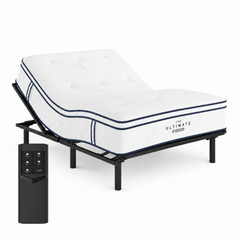
An adjustable base requires a compatible mattress — one flexible enough to articulate through the elevation range without damaging its structure. Innerspring mattresses with rigid construction do not articulate well. Polyurethane foam articulates but introduces the chemical concerns documented throughout this content.
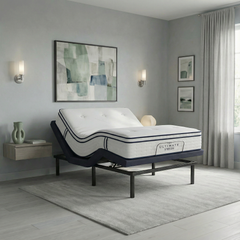
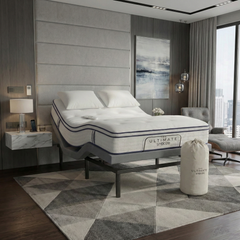
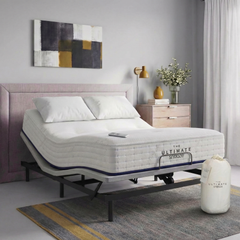
Natural latex — the core of both the Gary Brecka Organic Mattress and the Organic Mattress by Ultimate Snooze — is the ideal adjustable base pairing material. It is inherently flexible, conforms through the elevation range without stress fractures or structural damage, and maintains its pressure-relieving properties in all positions. The organic latex and coil construction of the Ultimate Snooze mattresses is designed to work with adjustable bases — delivering the positional benefits of the base while maintaining the clean, non-toxic sleep environment the organic materials provide.
The positional benefits of zero-gravity, head elevation, and foot elevation compound with the thermal, chemical, and support benefits of an organic mattress. Neither is the complete answer alone. Together, they address the full range of what the sleep environment can do for the body overnight.