



By Jacob Rivera, Creative Director at The Ultimate Snooze
It is one of the more common household questions with a surprisingly uncomfortable answer: how often should you clean your sheets? The general guidance from most sleep and hygiene sources lands around once a week to once every two weeks. That cadence is reasonable from a practicality standpoint. From a microbiology standpoint, what is living in your bedding between washes is a more pointed argument for the shorter end of that range — and for paying close attention to what your sheets and mattress are actually made from.
What Accumulates in Sheets Between Washes
Every night, the average adult sheds approximately 30,000 to 40,000 dead skin cells per hour. Across eight hours of sleep, that is a substantial biological deposit into the sheet and mattress surface. Alongside dead skin, sleepers deposit sweat — roughly a liter per night in temperate conditions — as well as body oils, saliva, pet dander if pets share the bed, and whatever particulates settled on skin and hair throughout the day.
Dust mites: Dead skin cells are the primary food source for dust mites, microscopic arachnids that colonize mattresses and bedding at scale that most people find surprising. The Asthma and Allergy Foundation of America estimates that a typical used mattress contains between 100,000 and 10 million dust mites. Their fecal matter and shed body parts are among the most common indoor allergens, triggering symptoms in approximately 20 million Americans. Washing sheets in hot water (at least 130°F) kills dust mites in the sheet itself. But the mattress beneath is a longer-term reservoir.
Bacteria and fungi: Research published in the journal PLOS ONE found significant bacterial and fungal populations in pillow samples collected from healthy adults, including Staphylococcus, Streptococcus, and a range of fungal species. Aspergillus fumigatus, a mold species capable of causing serious respiratory illness in immunocompromised individuals, was among the organisms identified. These populations build between wash cycles, with bacterial counts increasing measurably after as little as one week of use.
VOCs from sweat metabolism: Sweat contains urea, lactic acid, and amino acids that break down over time into volatile compounds. In synthetic bedding that retains moisture rather than wicking it, this breakdown accelerates and produces the characteristic odor of unwashed sheets, along with a chemical environment that is conducive to further microbial growth.
How Fabric Type Affects Microbial Accumulation
Not all sheets create the same environment for microbial growth, and this is where material choice has a measurable impact beyond feel and durability.
Synthetic fibers (polyester, microfiber, blended synthetics) are hydrophobic — they repel water at the fiber level, which means sweat does not absorb into the fiber but instead remains on the surface and within the spaces between fibers. The result is a moist, warm microenvironment at the sheet surface that is highly conducive to bacterial and fungal proliferation. Synthetic fibers also generate static charge that attracts and holds particulates, including the dead skin cells that feed dust mites. Microfiber sheets in particular, despite being marketed for their softness, have microscopic gaps between fibers that trap biological material and are difficult to fully clear even with repeated washing.
The pesticide and chemical residues from conventional cotton production, and the chemical finishes applied to synthetic sheets for softness, wrinkle resistance, and moisture-wicking properties (often including formaldehyde-based finishes), add a chemical layer to the biological one that compounds the picture of what you are sleeping in contact with every night.
Organic cotton and natural linen are hygroscopic — they absorb moisture into the fiber itself, wicking it away from the skin surface and releasing it as vapor. This moisture management actively reduces the warm, moist surface conditions that bacteria and fungi require. Organic cotton's natural fiber structure is more easily cleared of biological material in a standard wash cycle. Research on cotton versus synthetic fabric antimicrobial properties has found that natural fibers demonstrate meaningfully lower bacterial adhesion and retention compared to synthetic alternatives under equivalent conditions.
Linen (flax fiber) is additionally notable for a natural resistance to fungal growth attributable to its silica content and fiber structure. It is one of the historically documented properties of linen that contributed to its use as medical bandaging material for centuries before synthetic alternatives existed.
Shop Organic Breezeline Sheets
The Mattress Beneath the Sheet
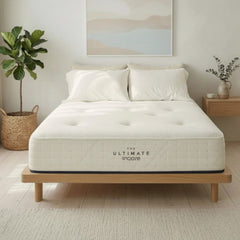
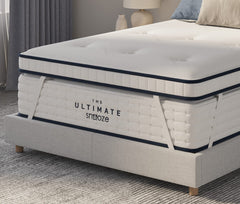
Sheets are washed. Mattresses almost never are. And the materials inside a conventional mattress determine how much of what passes through the sheet layer is retained over the mattress's lifespan.
Polyurethane foam is porous and absorbs moisture. Sweat that penetrates through the sheet layer over time saturates the top layers of foam and creates a deep-set reservoir of moisture, dead skin cells, and microbial colonization that cannot be addressed through surface cleaning. Sleep hygiene sources consistently note that conventional foam mattresses accumulate microbial populations that contribute to allergy symptoms and air quality issues over their lifespan, with the top layers of foam showing the highest concentrations.
The porous, absorptive structure of polyurethane foam means that what goes in tends to stay in. Mattress protectors reduce the rate of penetration but do not eliminate it over time, particularly at the seams and around the edges where protectors fit imperfectly.
Organic natural latex has a fundamentally different structure. It is naturally antimicrobial and antifungal — a property latex retained from the rubber tree's biological environment — and its open-cell structure allows airflow rather than moisture retention. Organic wool, used as a fire barrier and comfort layer, has natural lanolin content that is inherently resistant to dust mite colonization. Research on wool's antimicrobial properties has found that wool fiber resists the moisture conditions that bacterial and fungal organisms require to establish colonies in bedding and mattress surfaces.
Shop the Ultimate Snooze Organic Mattress Collection
How Often Should You Actually Wash Your Sheets?
The evidence-based answer:
Weekly if you sleep hot, sweat during sleep, have allergies or asthma, share the bed with pets, or have had any illness in the household recently. Hot water washing at 130°F or above is required to kill dust mites — warm water reduces populations but does not eliminate them.
Every 10 to 14 days as a minimum for adults without the above factors sleeping in cool conditions.
Pillowcases more frequently than sheets — every three to four days — given direct contact with the face, hair product residue, and proximity to the mouth and eyes.
Washing frequency matters, but so does what you are washing. Sheets that wick moisture effectively between washes reduce the conditions under which microbial populations build. A mattress that resists moisture absorption and microbial colonization extends meaningful protection beyond what washing the sheet surface alone can address.
The most complete answer to how often you should clean your sheets includes both a washing cadence and a material choice that reduces what needs cleaning in the first place.
)