










By Jacob Rivera, Creative Director at The Ultimate Snooze
The conventional weight management equation is simple: calories in, calories out, add movement. When it does not work despite consistent effort, the instinct is to look at what you are eating or how you are training. Almost nobody looks at how they are sleeping.
They should. The research connecting poor sleep to weight gain is not peripheral — it goes to the core of how the body regulates hunger, fat storage, and metabolic rate. And the mechanisms involved are hormonal, not motivational. You cannot willpower your way out of what sleep deprivation does to your metabolism.
Ghrelin, Leptin, and the Hunger Hormones
Two hormones govern hunger and satiety: ghrelin, which signals hunger, and leptin, which signals fullness. Both are calibrated during sleep. When sleep is insufficient or disrupted, the calibration goes wrong in a specific, measurable direction.
A landmark study published in PLOS Medicine followed over 1,000 participants and found that those sleeping fewer than eight hours had significantly higher ghrelin levels and significantly lower leptin levels than adequate sleepers — producing an appetite increase of approximately 24% and a strong preference for high-calorie, high-carbohydrate foods. The subjects were not making poor choices. Their hormones were telling them they were hungry even when they had eaten enough, and removing the neurological signal that would have told them to stop.
Research published in the Archives of Internal Medicine found that even modest sleep restriction — reducing from 8.5 hours to 5.5 hours — produced a 55% increase in food intake from snacks and a significant shift toward higher-calorie options. The participants were not aware of eating significantly more. The hormonal shift happened below the level of conscious awareness.
This is important to understand: the effect is not about willpower. Ghrelin and leptin operate at the level of basic biological signaling. When they are miscalibrated by sleep deprivation, the hunger signal is louder than normal and the fullness signal is quieter than normal, regardless of how disciplined the person is in other areas of their life.
Cortisol, Insulin, and Fat Storage
Poor sleep elevates cortisol — the body's primary stress hormone. Cortisol has a specific relationship with fat storage: it preferentially promotes visceral fat accumulation, the metabolically active fat stored around the abdominal organs that is most strongly associated with cardiovascular risk and metabolic dysfunction.
Research published in the Journal of Clinical Endocrinology and Metabolism found that sleep restriction produced a significant elevation in evening cortisol levels, with the effect compounding across consecutive nights of restricted sleep. The body essentially reads insufficient sleep as a stressor and responds with the hormonal cascade designed for stress — which includes holding onto fat stores and prioritizing quick-energy fuel sources like sugar.
Cortisol also impairs insulin sensitivity. When cells become less responsive to insulin, blood glucose stays elevated longer after eating, more glucose is converted to fat, and the body requires increasing amounts of insulin to achieve the same glucose uptake. Research in Diabetes Care confirmed that even one week of sleep restriction produces insulin resistance comparable to the early stages of type 2 diabetes in healthy young adults — reversible with adequate sleep, but a meaningful metabolic disruption during the restriction period.
What Sleep Does to Your Resting Metabolic Rate
Beyond hunger hormones and cortisol, sleep deprivation affects the resting metabolic rate — the number of calories the body burns at rest. Research published in the American Journal of Clinical Nutrition found that sleep-restricted subjects burned fewer calories during rest than adequate sleepers, while simultaneously eating more due to the ghrelin/leptin disruption. The combination — higher intake, lower expenditure, elevated cortisol driving fat storage — creates a metabolic environment that is, by every measure, oriented toward weight gain regardless of the person's dietary choices during waking hours.
The same study found that sleep restriction also reduced the proportion of weight lost as fat during a caloric deficit period, with subjects losing significantly more lean mass and less fat mass when sleep-restricted versus when adequately rested. If you are dieting, poor sleep makes you lose the wrong weight.
Disrupted Sleep and the Chemical Load That Makes It Worse
The hormonal consequences of poor sleep are real and documented. But there is a second layer to this story that connects to the sleep environment itself.
Endocrine-disrupting compounds — including flame retardants and VOCs from conventional polyurethane foam mattresses — have documented effects on the same hormonal systems that regulate weight. Research in Environmental Health Perspectives found that PBDE flame retardant exposure is associated with altered thyroid hormone levels, and thyroid hormones are among the primary regulators of resting metabolic rate. Organophosphate flame retardants, the most common replacement class for PBDEs, have been associated with insulin resistance and disrupted adiponectin signaling — a hormone that governs fat metabolism.
A person sleeping on a conventional foam mattress is receiving nightly chemical inputs, through inhalation and skin absorption, that directly interfere with the hormonal systems that sleep is supposed to be restoring. The mattress is working against the repair the body is trying to perform.
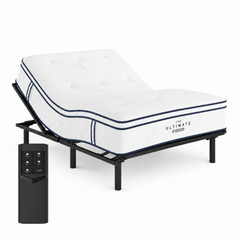
The Gary Brecka Organic Mattress — the Pillow Top Organic Latex Mattress designed by Gary Brecka — contains no polyurethane foam and no chemical flame retardants. GOLS-certified organic latex and organic wool replace every synthetic material category associated with endocrine disruption. The Organic Mattress by Ultimate Snooze in both configurations (Pure and Pillow Top) removes the nightly chemical input from the metabolic equation, allowing the hormonal restoration that sleep is designed to deliver to happen without interference from the materials beneath you.
The Weight Management Variable Nobody Talks About
If you are doing the visible work — tracking food, training consistently, managing stress — and still not seeing the results those inputs should produce, sleep quality and duration are the variable most likely to explain the gap.
The research is unambiguous: insufficient sleep increases hunger, reduces satiety, elevates cortisol, drives visceral fat storage, reduces insulin sensitivity, lowers resting metabolic rate, and impairs fat loss during caloric restriction. It does all of these things through mechanisms that operate independently of conscious choice.
Fixing the sleep is not a supplementary health goal. For a meaningful portion of people struggling with weight, it is the primary lever — the one that changes what every other lever can accomplish.
Gary Brecka Organic Mattress — Pillow Top Organic Latex (Medium Plush) →