



By Jacob Rivera, Creative Director at The Ultimate Snooze
Most advice on falling asleep faster falls into two categories: obvious tips you already know ("put your phone down") and pseudoscience marketed as biohacking. The actual research on sleep onset is more specific, more interesting, and more actionable than either. Here is what the science says works — and the mechanisms behind why.
Understand Why You Can't Fall Asleep in the First Place
The most common cause of delayed sleep onset is a nervous system that has not adequately transitioned from sympathetic (alert, activated) to parasympathetic (calm, restorative) state. You get into bed, but your nervous system has not gotten the memo. Cortisol levels that should be falling are still elevated. Core body temperature is still too high. The brain is still producing beta waves associated with active thinking rather than the alpha and theta waves that precede sleep.
According to the National Institute of Neurological Disorders and Stroke, healthy sleep onset typically takes 10 to 20 minutes. Taking longer than 30 minutes consistently is classified as sleep onset insomnia and affects an estimated 30% of adults at some point. The causes are largely behavioral and environmental — which means they are largely fixable.
The Military Sleep Method
Developed to help U.S. military personnel fall asleep under adverse conditions, this method involves a sequential physical and mental relaxation protocol. Relax the muscles of the face first — forehead, jaw, tongue. Drop the shoulders. Release the hands. Work down through the chest, legs, and feet, consciously releasing tension at each point. Once the body is relaxed, hold a mental image of a peaceful environment — a still lake, a darkened room — for ten seconds. If thoughts intrude, actively redirect to the image.
The method was reported in Lloyd Bud Winter's 1981 book Relax and Win and has been cited by military researchers as achieving sleep onset in under two minutes for trained users. The underlying mechanism is progressive muscle relaxation — a technique with robust clinical evidence for reducing sleep onset latency published in the Journal of Behavioral Medicine.
The 4-7-8 Breathing Technique
Developed by Dr. Andrew Weil based on pranayama breathing principles, the 4-7-8 technique involves inhaling for 4 counts, holding for 7, and exhaling slowly for 8. The extended exhale activates the parasympathetic nervous system by stimulating the vagus nerve. Research on slow-paced breathing published in Frontiers in Psychology documented measurable reductions in heart rate, cortisol levels, and subjective anxiety within five minutes of practice. The extended exhale-to-inhale ratio is the key variable — it directly shifts autonomic nervous system balance toward parasympathetic dominance.
Warm Shower or Bath 60–90 Minutes Before Bed
This is one of the most consistently replicated findings in sleep onset research. Warm water raises skin temperature, which triggers the body's thermoregulatory response — blood vessels near the skin dilate to release heat, accelerating the core temperature drop that the body needs to initiate sleep. A 2019 meta-analysis in Sleep Medicine Reviews covering 13 studies found that bathing in water between 104–109°F, 1–2 hours before bed, reduced sleep onset time by an average of 10 minutes and improved sleep quality scores across all included studies. The timing matters — too close to bedtime, and the elevated skin temperature hasn't had time to translate to the core temperature drop.
Get Out of Bed If You Can't Sleep
This is counterintuitive but well-supported. The bed should be associated with sleep — not with lying awake, anxious about not sleeping. When you lie in bed unable to sleep for more than 20 minutes, the bed begins to function as a cue for wakefulness rather than sleep through a process called conditioned arousal. The American Psychological Association's documentation on Cognitive Behavioral Therapy for Insomnia (CBT-I) — the gold-standard non-pharmacological treatment — centers on stimulus control: if you're not asleep in 20 minutes, get up, do something calm in low light, and return when sleepy. It feels wrong. It consistently works.
The Sleep Environment as the Underlying Variable
All of the above methods help signal the body toward sleep. But if the sleep environment is working against you — if the surface is too warm, if chemical off-gassing from synthetic foam is keeping the nervous system partially activated, if the pillow is creating enough discomfort to prevent full relaxation — sleep onset methods are compensating for an environmental problem rather than solving it.
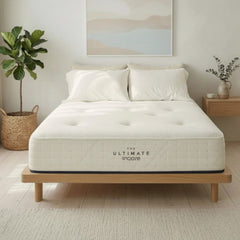
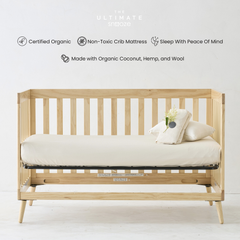
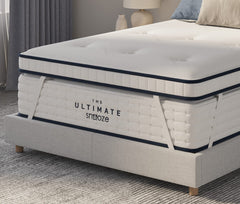
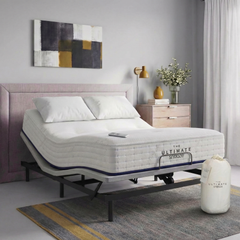
The Gary Brecka Organic Mattress and the Organic Mattress by Ultimate Snooze are built specifically to support the parasympathetic transition that sleep onset requires. Organic natural latex and wool create a thermal environment that supports the core temperature drop. No VOC off-gassing means no chemical stress inputs keeping the nervous system from fully downshifting. Proper cervical and lumbar support means no discomfort requiring the body to reposition and restart the relaxation process.
Methods accelerate the process. The environment determines the ceiling.