







By Jacob Rivera, Creative Director at The Ultimate Snooze
Of all the supplements marketed for sleep, magnesium has some of the most legitimate mechanistic support. Unlike melatonin — which is a timing hormone often used incorrectly — magnesium operates directly on the nervous system pathways involved in relaxation and sleep induction. Understanding how it works and which form to take is worth a few minutes if sleep quality is a priority.
Why Magnesium Matters for Sleep
Magnesium is the fourth most abundant mineral in the human body and a cofactor in over 300 enzymatic reactions. For sleep specifically, two mechanisms are most relevant.
GABA receptor activation: Magnesium binds to and activates GABA (gamma-aminobutyric acid) receptors in the brain. GABA is the primary inhibitory neurotransmitter — it quiets neural activity and promotes the calm, reduced arousal state that precedes sleep. This is the same receptor family targeted by benzodiazepine sleep medications and alcohol, which is why low magnesium status is associated with anxiety, hyperarousal, and difficulty falling asleep.
NMDA receptor blockade: Magnesium blocks NMDA (N-methyl-D-aspartate) receptors, which are involved in excitatory neural activity. By reducing excitatory signaling and enhancing inhibitory signaling simultaneously, magnesium creates a dual effect that supports the transition from the active, alert nervous system state to the calm, sleep-ready state.
Research published in the Journal of Research in Medical Sciences found that magnesium supplementation in older adults with insomnia significantly improved sleep onset time, sleep duration, early morning awakening, and insomnia severity scores compared to placebo over eight weeks. Objective sleep measures including sleep efficiency and serum melatonin levels also improved.
The Deficiency Problem
The NIH Office of Dietary Supplements estimates that approximately 48% of Americans consume less magnesium than the recommended daily amount. Deficiency is exacerbated by chronic stress (which depletes magnesium), high sugar intake, alcohol consumption, and several common medications including proton pump inhibitors and diuretics. Athletes and highly physically active individuals deplete magnesium faster through sweat loss.
The standard symptom list for magnesium deficiency includes muscle cramps, anxiety, irritability, and sleep disturbance — a cluster that describes a large portion of people who report poor sleep quality. Many people supplementing with melatonin for sleep problems may be deficient in magnesium and would respond better to addressing that deficiency directly.
Which Form of Magnesium for Sleep
This is where most general advice falls short. Magnesium supplements vary significantly in bioavailability and neurological effect by form:
Magnesium glycinate: The preferred form for sleep and anxiety. Glycine — the amino acid it is bound to — is itself a calming neurotransmitter with independent sleep-supportive properties. Research in Sleep and Biological Rhythms found that glycine supplementation alone improved sleep quality scores and reduced fatigue in subjects with self-reported poor sleep. Magnesium glycinate combines the GABA-activating properties of magnesium with the calming and core-temperature-lowering effects of glycine. High bioavailability, low gastrointestinal side effects.
Magnesium threonate (MgT): The only form demonstrated to cross the blood-brain barrier in meaningful concentrations. Specifically studied for cognitive function and sleep quality. Higher cost, but the best option if brain-level effects are the goal. Research in Nutrients found MgT improved sleep quality in middle-aged adults with subjective sleep complaints.
Magnesium oxide: The most common and cheapest form. Poorest bioavailability — approximately 4% absorbed. Functions primarily as a laxative. Not recommended for sleep support.
Magnesium citrate: Better bioavailability than oxide. More bioavailable than oxide, less so than glycinate. May cause loose stools at higher doses. Reasonable middle option.
Recommended dose for sleep: 200–400mg magnesium glycinate or threonate, taken 30–60 minutes before bed.
What Magnesium Cannot Do
Magnesium addresses a specific pathway — GABAergic inhibition and nervous system calming. It does not address sleep apnea, circadian misalignment, elevated cortisol from chronic stress, or the environmental factors that disrupt sleep architecture. A person sleeping on a heat-trapping mattress that off-gasses compounds keeping their nervous system partially activated will notice limited benefit from magnesium supplementation — because the supplement is working to calm a system that the environment is simultaneously stimulating.
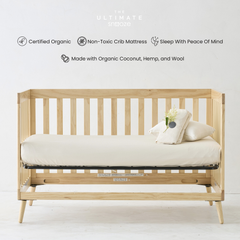
The full picture requires both. Magnesium supports the nervous system's ability to downshift. The sleep environment determines whether that downshift can complete. The Organic Mattress by Ultimate Snooze — organic natural latex, organic wool temperature regulation, no chemical off-gassing — provides the environmental foundation that makes magnesium's effects more fully expressed. Supplement to the ceiling the environment permits. Then raise the ceiling.