




By Jacob Rivera, Creative Director at The Ultimate Snooze
Most people think of the immune system as something that responds to threats — bacteria, viruses, injuries. What gets less attention is how much of its core maintenance work happens proactively, on a schedule, during sleep. The immune system is not simply waiting for something to fight. It is continuously monitoring, calibrating, and strengthening itself. And the window for that work is the night.
What the Immune System Does While You Sleep
Cytokine production: Cytokines are small proteins that regulate immune responses — coordinating inflammation, directing immune cells to sites of infection or injury, and governing the overall intensity and duration of immune activity. Many of the most important cytokines, including interleukin-1, interleukin-6, and tumor necrosis factor, are produced and released primarily during sleep. Research published in Pflugers Archiv documented that slow-wave sleep in particular is associated with peak cytokine production, with the immune-regulatory output during this stage significantly exceeding waking levels.
T-cell activation and memory: T-cells are the immune system's most targeted fighters — capable of recognizing and destroying specific pathogens. During sleep, T-cells increase their expression of integrins, the proteins that allow them to adhere to and attack infected cells. Research published in the Journal of Clinical Investigation found that T-cell integrin activation was significantly higher during sleep than during comparable waking periods, and that this effect was mediated by the reduction in stress hormones (particularly adrenaline) that occurs during sleep. Poor sleep keeps adrenaline elevated, directly impairing T-cell function.
Vaccine response: The immune memory formation that makes vaccines effective depends substantially on sleep. Research in the Journal of Immunology found that sleep-deprived subjects produced only half the antibody response to a hepatitis A vaccine compared to those who slept normally in the nights following vaccination. The immune cells responsible for generating vaccine-specific antibodies operate with reduced efficiency when sleep is disrupted — a finding with significant implications for anyone who got a vaccine and then didn't prioritize sleep afterward.
Inflammation regulation: Sleep regulates the balance between pro-inflammatory and anti-inflammatory cytokines. Insufficient sleep shifts this balance toward chronic low-grade inflammation — a state associated with cardiovascular disease, metabolic dysfunction, and accelerated cellular aging. Research in Sleep found that restricting sleep to six hours or fewer for a week produced significant increases in inflammatory markers including CRP (C-reactive protein), with levels comparable to those seen in early-stage chronic inflammatory conditions.
The Evidence on Sleep and Getting Sick
The research does not just show reduced immune function in the abstract — it documents higher illness rates in people who sleep less.
A landmark study published in Sleep exposed 164 healthy adults to rhinovirus (the common cold) via nasal drops and tracked infection rates against objectively measured sleep duration. Those sleeping fewer than six hours per night were 4.2 times more likely to develop a cold than those sleeping seven hours or more. Sleeping five hours or fewer elevated the risk to 4.5 times. No other measured variable — stress, smoking, alcohol, demographic factors — explained the effect.
Four times more likely to get sick. From sleep duration alone.
What the Sleep Environment Has to Do With Immune Function
The immune system's work during sleep requires the body to be in deep, sustained parasympathetic activity — the nervous system state opposite to the fight-or-flight stress response. Chemical inputs that activate stress pathways work directly against this requirement.
VOCs from polyurethane foam and chemical flame retardants in conventional mattresses have documented effects on immune function. Research in Environmental Health Perspectives found that PBDE flame retardants alter cytokine profiles and shift immune responses toward inflammatory patterns at household exposure levels. Formaldehyde, a common foam off-gas compound, is classified by the International Agency for Research on Cancer as a Group 1 carcinogen with documented immunotoxic effects.
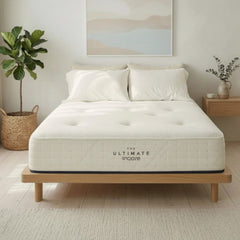
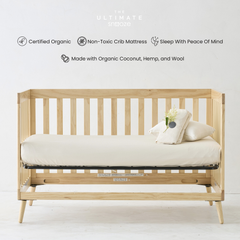
Sleeping on a conventional foam mattress means spending eight hours in a chemically active environment during the exact window when the immune system is doing its most critical calibration. The Gary Brecka Organic Mattress and the Organic Mattress by Ultimate Snooze — both built from GOLS-certified organic latex, organic wool, and organic cotton — remove that chemical input entirely. No VOC off-gassing. No flame retardant compounds altering cytokine balance. The immune system gets the clean, undisturbed sleep window it needs to do its work.
Gary Brecka Organic Mattress — Pillow Top →