







By Jacob Rivera, Creative Director at The Ultimate Snooze
You slept. Seven, eight, maybe nine hours. And you still woke up tired. If this is a recurring pattern rather than an occasional rough night, it is almost certainly not about the number of hours. It is about what happened — or did not happen — during those hours. Sleep duration and sleep quality are not the same thing, and measuring only one of them misses most of the picture.
You May Be Getting Hours But Not Cycles
Sleep is not a single continuous state. It cycles through four distinct stages — three non-REM stages and REM — in approximately 90-minute cycles, with four to six complete cycles making up a full restorative night. The deep biological work of sleep — growth hormone release, immune calibration, memory consolidation, emotional processing — is distributed across these stages in ways that require completing full cycles.
When sleep is fragmented — waking briefly throughout the night, shifting between stages without completing them — the hours accumulate but the cycles do not complete. The CDC's sleep data shows that approximately 35% of American adults report regularly sleeping fewer than seven hours, but the percentage reporting unrefreshing sleep — feeling tired despite sleeping — is significantly higher, suggesting that quality disruption affects far more people than simple duration deficit.
Common Causes of Unrefreshing Sleep
Sleep apnea and upper airway resistance: Obstructive sleep apnea causes the airway to partially or fully collapse during sleep, producing micro-arousals — brief waking events that fragment sleep architecture without the sleeper fully waking. The result is hours in bed with severely disrupted sleep cycling. The National Heart, Lung, and Blood Institute estimates that over 30 million Americans have sleep apnea, with the majority undiagnosed. The defining symptom is waking tired despite adequate or excessive time in bed.
Elevated cortisol at night: Cortisol follows a circadian rhythm — high in the morning, low at night. When that rhythm is disrupted by chronic stress, irregular schedules, or stimulant use (including caffeine after noon), nighttime cortisol levels remain elevated. High cortisol keeps the nervous system in a partially activated state that prevents reaching and sustaining deep sleep stages. Research in Psychoneuroendocrinology documented that elevated evening cortisol was strongly associated with reduced slow-wave sleep and higher rates of subjective non-restorative sleep.
Sleeping hot: The core body temperature must drop 1–2°F for the body to enter and sustain deep sleep. A sleep surface that traps heat — including virtually all polyurethane foam mattresses — keeps skin temperature elevated and forces the body to spend more time in lighter sleep stages. Waking from predominantly light sleep feels categorically different from waking from a night that included sufficient deep sleep. You have hours, but you don't have depth.
Nutritional deficiencies: Iron deficiency, vitamin D deficiency, and magnesium deficiency are each independently associated with non-restorative sleep and daytime fatigue. The NIH Office of Dietary Supplements identifies fatigue as one of the primary symptoms of iron deficiency, which affects an estimated 10 million Americans. Thyroid dysfunction — both hypo- and hyperthyroidism — also produces significant fatigue independent of sleep duration.
Chemical disruption during sleep: This is the one most people have never considered. Volatile organic compounds off-gassed by conventional foam mattresses, and endocrine-disrupting compounds from chemical flame retardants, have documented effects on sleep architecture and hormonal function. Spending eight hours breathing these compounds in the enclosed microclimate around your mattress does not produce the same restorative sleep as eight hours in a chemically clean environment — even if the clock shows the same duration.
What to Check First
If you consistently wake tired despite adequate sleep time, rule these out in order: sleep apnea (most common undiagnosed cause — your partner's report on snoring or breath pauses is a significant indicator), iron and vitamin D levels (simple blood test), evening cortisol patterns (are you using caffeine, alcohol, or bright screens late?), and sleep surface temperature.
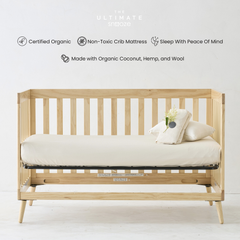
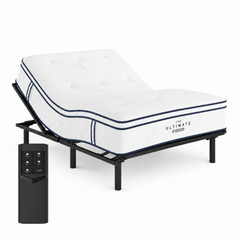
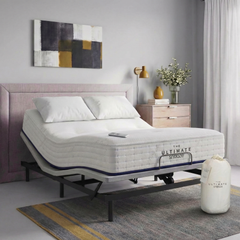
The sleep environment piece is often the last thing people examine and the easiest to change. A mattress that breathes — like the organic natural latex in the Organic Mattress by Ultimate Snooze — actively supports the core temperature drop that deep sleep requires. Organic wool wicks moisture and buffers thermal fluctuations. The result is more time in deep sleep stages, which is the variable that determines whether eight hours feels like eight hours when you wake up.
Duration without depth is not rest. Understanding what is preventing depth is where the fix actually lives.