














You fall asleep fine. You stay asleep for a few hours. And then — almost on schedule — you're staring at the ceiling at 3 in the morning. Sound familiar?
This is one of the most common sleep complaints people search for, and it has a real biological explanation. It's not stress. It's not your phone. And it's not something you just have to live with.
What's Actually Happening at 3AM
Sleep isn't a flat, unchanging state. Your body cycles through stages — light sleep, deep NREM sleep, and REM — in roughly 90-minute windows. By the early morning hours (typically between 2 and 4AM), your sleep is naturally shifting into lighter stages, and a few key biological events happen simultaneously.
1. Cortisol begins to rise. Your body starts preparing for the day well before your alarm goes off. According to research published in the National Library of Medicine, cortisol levels begin climbing in the early morning hours as part of the natural circadian rhythm. If your baseline cortisol is already elevated — due to stress, poor sleep quality, or a toxic sleep surface — this rise happens earlier and harder, waking you up.
2. Blood sugar may be dropping. If you ate late or had alcohol before bed, your blood sugar can dip low enough in the early morning hours to trigger the release of adrenaline — a stress hormone that wakes you up as a survival response.
3. Your deep sleep is finished — and your body knows it. The majority of slow-wave deep sleep happens in the first half of the night. By 3AM, your body has completed most of that work and shifts heavily toward REM. If your sleep environment isn't optimized for this lighter, more temperature-sensitive phase, you'll surface into consciousness instead of cycling through it.
The Role Your Sleep Surface Plays
This is where most people miss the fix. You can take magnesium, dim your lights, and stop scrolling — and still wake up at 3AM — if your mattress is creating the conditions for it.
A mattress that traps heat causes your core body temperature to rise during exactly the wrong phase of sleep. A mattress with poor pressure relief causes micro-movements and micro-arousals throughout the night. And a mattress that doesn't support spinal alignment keeps your nervous system running at a low simmer all night — making it easier for any small trigger to push you into wakefulness.
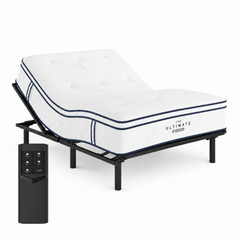
The Organic Mattress by Ultimate Snooze is built around organic wool — a natural temperature regulator — and certified organic latex, which provides pressure relief without heat retention. These aren't luxury features. They're the materials your biology actually needs to stay asleep through the vulnerable early morning hours.
What You Can Do Tonight
- Keep your room between 65–68°F. The Sleep Foundation identifies this as the optimal range for sustained sleep.
- Avoid alcohol within 3 hours of bed. Even one drink suppresses melatonin and destabilizes blood sugar overnight.
- Don't eat within 2 hours of sleep to prevent the blood sugar crash cycle.
- Evaluate your sleep surface. If you're waking at the same time every night, your body may be responding to physical discomfort you've stopped consciously noticing.
Waking at 3AM is a signal, not a flaw. Start listening to what it's telling you — and start with the one factor most people overlook: what they're sleeping on. Explore the Organic Mattress by Ultimate Snooze.